Getting dressed isn’t just about following trends or wearing the latest pieces. The way your clothes fit, how they fall and how they work together can dramatically change your overall silhouette.
Sometimes, an outfit can feel off, even though each piece looks great on its own. The problem may lie in a small styling detail, such as an awkward proportion, the wrong length, or too much volume in one area.
Here are five common style mistakes that can unintentionally ruin your silhouette, and how to avoid them.
1. Wearing The Wrong Proportions
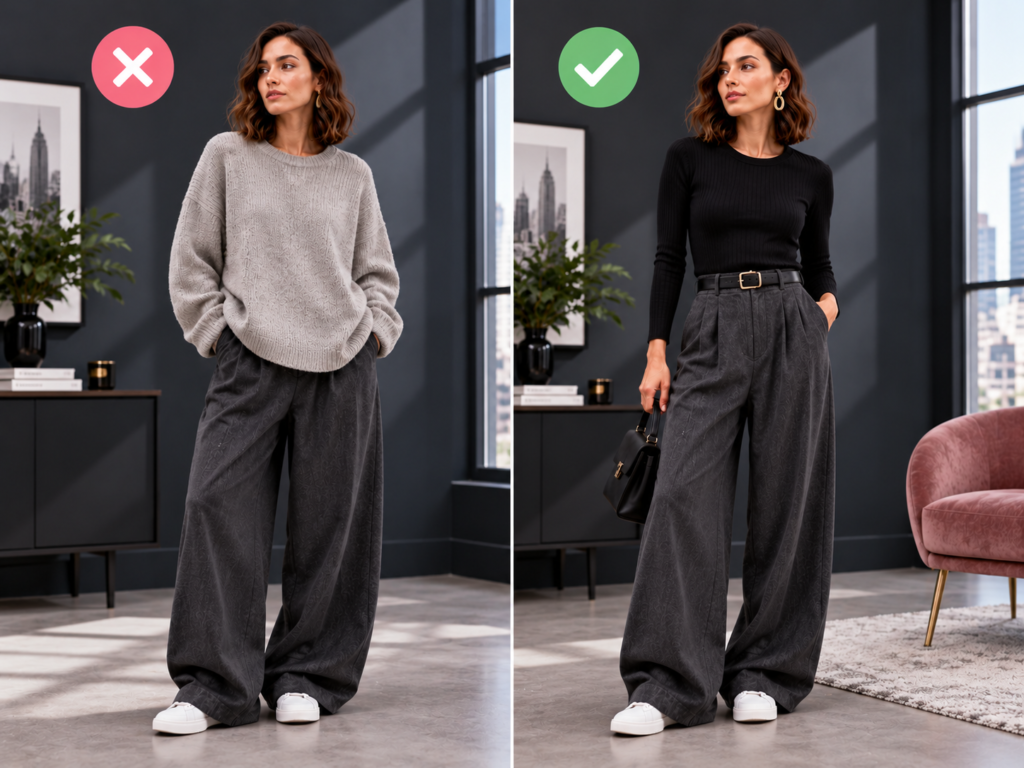
One of the biggest styling mistakes is combining pieces without considering how their proportions work together. Too much volume can overwhelm the shape of an outfit.
For example: An oversized top paired with wide-leg trousers can create a lot of volume from head to toe. Conversely, a fitted top with skinny-leg trousers can sometimes make the outfit feel visually unbalanced.
Try This Instead: Think about creating contrast between proportions.
- Pair wide-leg trousers with a more fitted or structured top.
- Balance an oversized jumper with slim-fit trousers or leggings.
- Wear a cropped jacket with high-waisted trousers/skirt, or a one-piece outfit like a jumpsuit or a dress.
- If both pieces are relaxed, define the waist with a belt or tuck in your top strategically.
You can still wear your oversized or fitted clothing, but ensure that the different volumes look intentional.
2. Choosing The Wrong Lengths
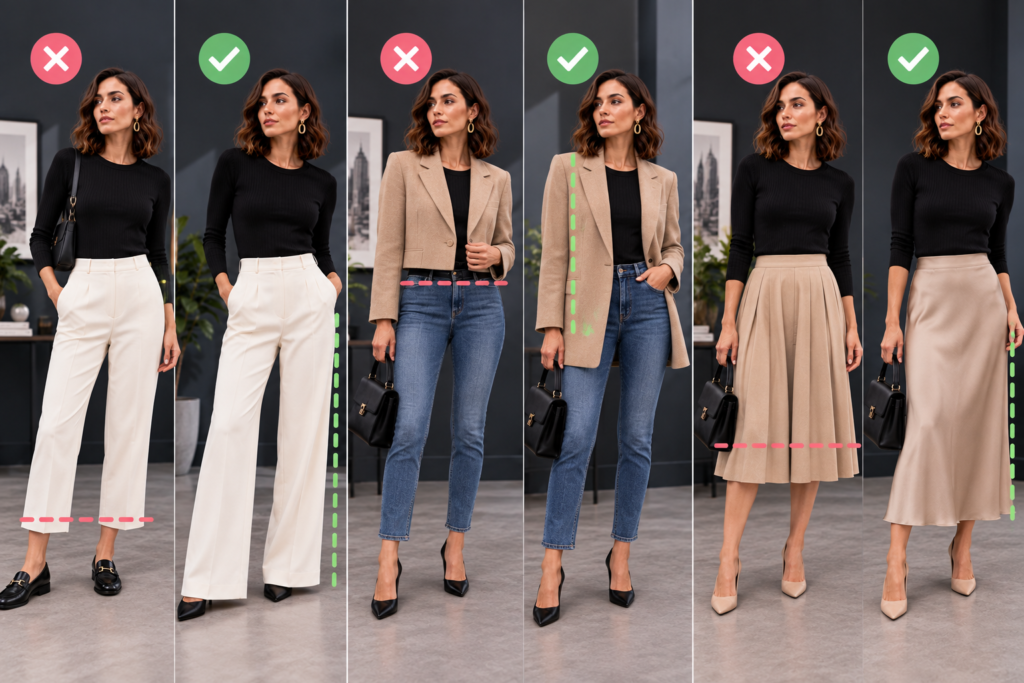
The length of your clothing can have a surprisingly strong effect on your silhouette.
For example: A jacket that ends at an awkward point, trousers that stop just above the ankle or a skirt that cuts across the widest part of the calf can all affect the visual flow of an outfit.
Try This Instead: Pay attention to where each garment ends on your body.
- For trousers, consider whether full-length, ankle-length or cropped styles work best with your choice of footwear.
- With jackets and coats, experiment with lengths that complement your outfit rather than interrupting it.
The trick is to view your outfit as a series of vertical lines. You generally want those lines to look deliberate rather than broken up randomly.
3. Ignoring The Waistline.
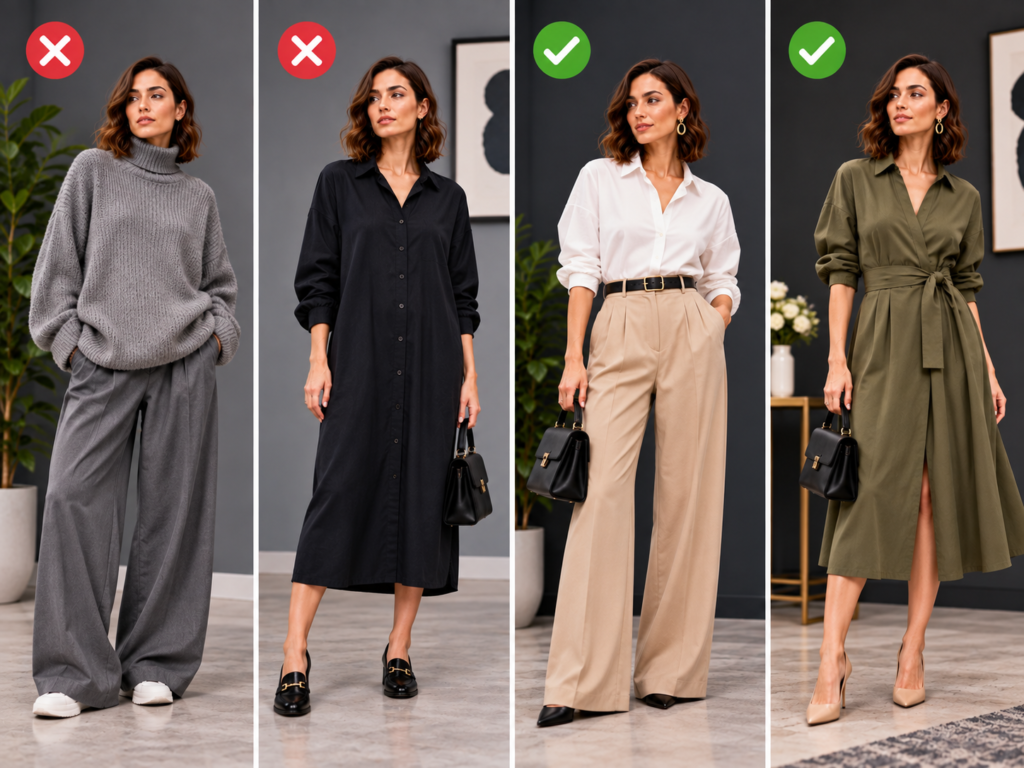
This doesn’t mean that your waist should be emphasised in every outfit, but completely ignoring it can sometimes make an outfit appear shapeless, and it is particularly noticeable when wearing several loose pieces at once.
Try This Instead: Create a subtle point of definition by,
- Tuck in part of your shirt.
- Add a belt.
- Choose high-waisted trousers or jeans.
- Wear a cropped jacket.
- Look for garments with strategic tailoring.
- Wear a blazer open over a fitted base layer.
Even a small amount of definition can give structure to an otherwise relaxed outfit.
4. Wearing Unflattering Colours
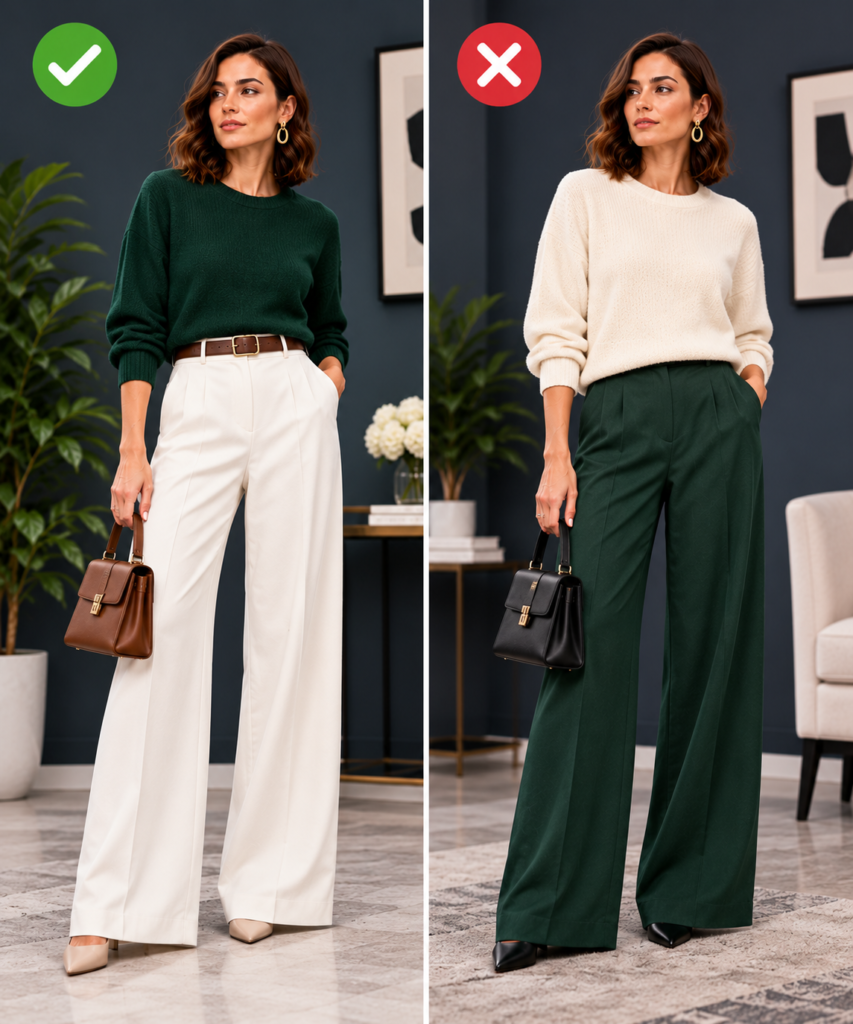
Just because a colour is beautiful doesn’t mean it suits you. Colours that complement your skin tone can instantly brighten your complexion, enhance your natural features and create a more balanced, polished look.
Conversely, unflattering colours can make your skin look dull, washed out or tired, and may affect how harmonious your outfit appears overall.
When choosing clothing, especially items worn close to your face such as tops, blazers, and dresses, consider how the colour interacts with your skin tone, undertone, hair colour, and natural contrast.
Try This Instead: Choose colours that flatter your skin tone and complement your undertone, natural intensity, and overall contrast. Colours that harmonise with your natural colouring can make your complexion look brighter and give your outfit a more cohesive look.
Note: If you love a colour that doesn’t flatter your complexion, wear it in accessories, such as shoes, trousers, skirts, or handbags.
There are no rigid colour rules here; the aim is to select shades that accentuate your features and create an overall harmonious look.
5. Forgetting The Importance Of Shoes And Accessories
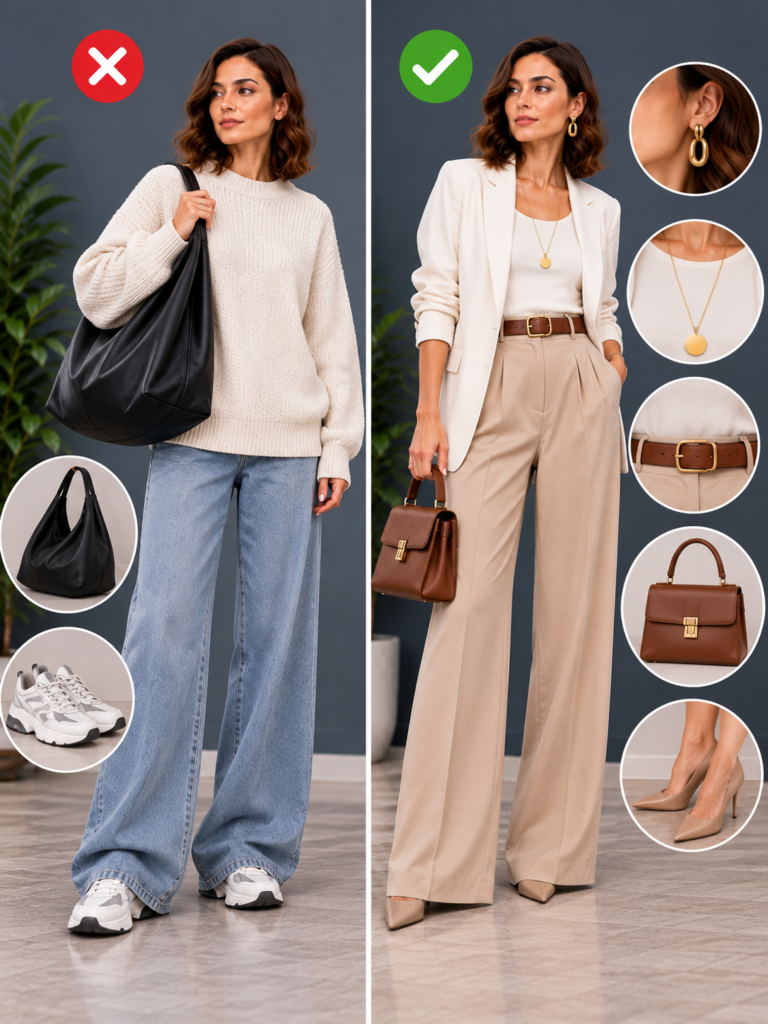
Shoes and accessories aren’t just finishing touches. They can influence the proportions of your entire outfit.
For example: A heavy shoe can visually add weight to the bottom half of an outfit, while a delicate shoe can create a lighter effect.
Similarly, a very large handbag can look disproportionate with a delicate outfit.
Try This Instead: Think of your accessories as part of your overall silhouette.
- A pointed-toe shoe can create a sleek, elongated look.
- A structured handbag can complement tailored clothing.
- A belt can visually connect your top and bottom.
- Longer necklaces can create additional vertical lines.
- Statement earrings can draw attention towards the face.
The key is coordination rather than making everything match perfectly.
Final Thought:
Having great personal style doesn’t necessarily mean buying more clothes. Often, it means learning how to style the clothes you already own to suit your proportions, personality and lifestyle.
The secret to a flattering outfit is not about following strict fashion rules, but about understanding balance, proportion and personal style.
When putting an outfit together, consider the complete picture. The clothing proportions, garment length, volume, waist definition, shoes, accessories, and the overall silhouette.
Sometimes, changing just one element, such as adding a belt, adjusting a hemline, or changing your shoes can completely transform the way an outfit looks and feels.
A Simple Style Check Before You Leave:
From now on, take a few seconds to look at your outfit from head to toe before you leave the house.
- Are the proportions balanced?
- Do the clothing lengths work together?
- Is the amount of volume intentional?
- Does your waist look the way you want it to?
- Do your shoes and accessories complement the outfit?
Small styling adjustments like these can transform an ordinary outfit into a polished, flattering look, helping you to create a naturally balanced and confident silhouette.
Ready To Take Your Personal Style To The Next Level?
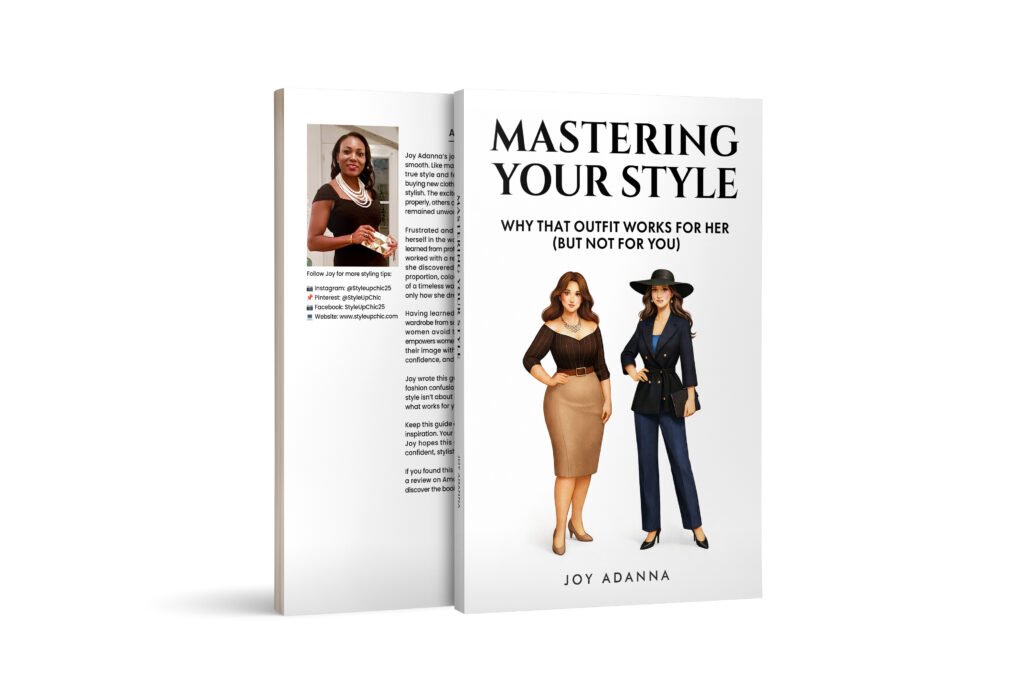
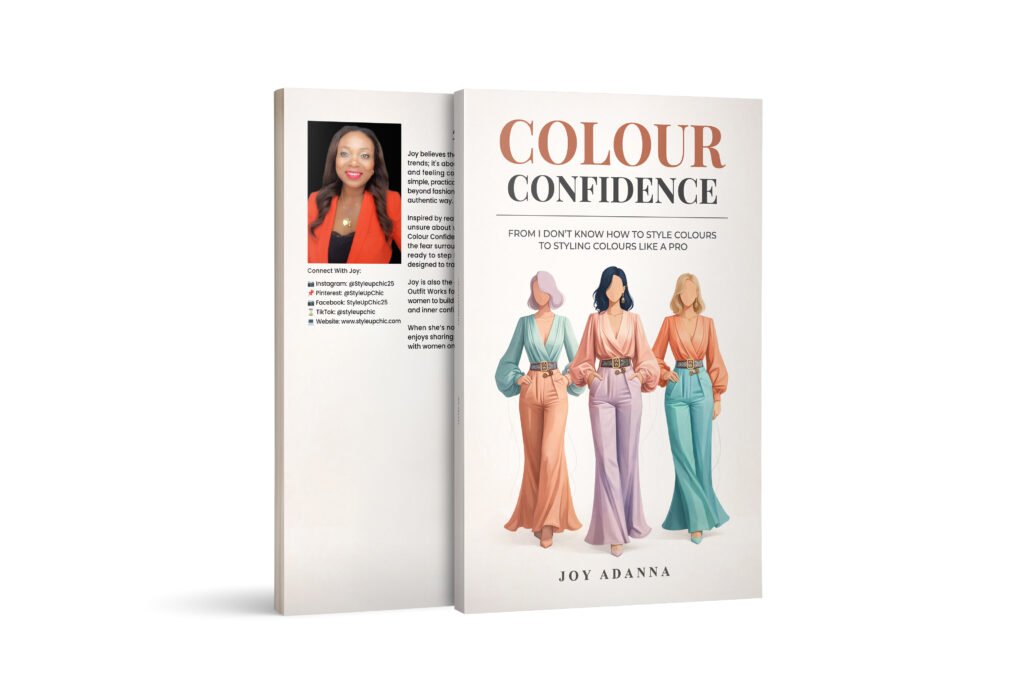
My books “Mastering Your Style” and “Colour Confidence” can help you refine your personal style, understand what truly suits you and make more confident choices about clothing, colour and proportions. They can also help you develop your signature style and become the best version of yourself, stylishly and confidently.
Explore My Books On Amazon And Start Your Style Journey Today!